
Yes, you can feed your rabbit celery as an occasional crunchy treat in small amounts. It’s high in water, which helps hydration, and the fiber can support normal digestion when you pair it with plenty of hay. Go slow—too much can cause softer droppings, gas, or stomach upset. Watch for reduced appetite, fewer poops, bloating, or lethargy, and stop right away if symptoms appear. Keep going to learn safe portions, timing, and what to avoid.
Should Rabbits Eat Celery? Quick Answer
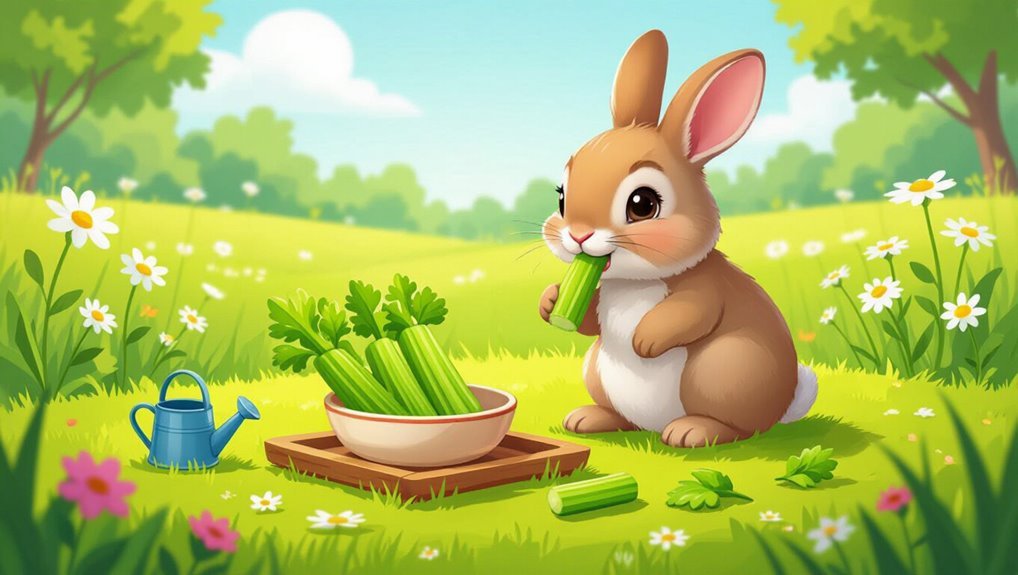
Yes—rabbits can eat celery in small amounts, and you can offer it as a crunchy treat.
You should treat celery like an occasional snack, not a staple, because too much can upset digestion. Cut celery into bite-sized pieces so your rabbit chews safely.
Start with a tiny amount, then watch for soft stools, gas, or reduced appetite for the next day. If symptoms show up, skip celery and switch back to mostly hay and grass.
Remove leaves if they’re wilted, and never feed celery seeds or heavily processed celery products.
Celery Benefits: Hydration and Fiber for Rabbits
You can support hydration by offering celery with its water content, helping your rabbit stay well-hydrated.
You’ll also boost fiber intake, which supports healthy digestion and keeps things moving in the gut.
Just make sure you serve it in small, bite-sized amounts to avoid upsetting their sensitive digestive system.
Hydration From Celery Water
Celery can help keep your rabbit hydrated because its water-rich stalks release moisture as your rabbit chews. When you offer small portions, you support normal water intake alongside fresh hay and water.
Celery water can also encourage sipping by adding flavor and moisture, especially on warm days. Keep portions modest so your rabbit doesn’t overeat or ignore their drinking bottle.
Offer washed, chopped celery stalks, and remove leftovers promptly.
- Helps add extra fluids to meals
- Encourages chewing and steady intake
- Best on hot, dry days
- Use small, washed portions only
Fiber Supports Healthy Digestion
Fiber supports healthy digestion in rabbits, and celery can contribute when you offer it in small amounts. You want your rabbit’s gut to keep moving, so feed fibrous foods that support normal stool.
Celery provides some roughage plus water from its crisp stalks, which helps prevent sluggish digestion. Chop celery into bite-size pieces and mix it with hay, the main fiber source.
Start with a few thin strips and watch for soft stools, gas, or reduced appetite. If any issues appear, pause celery and stick to consistent hay and leafy greens.
How Celery Affects Rabbit Digestion and Poops
Even though celery can be a fun treat, it can also change how your rabbit digests it and what its droppings look like. You’ll often see quicker gut movement, especially if you offer small amounts.
Celery’s water content can soften droppings slightly, while its fibrous strands help keep stool formed. Watch the texture and number of cecotropes too, since normal eating patterns matter.
If your rabbit gets regular, well-shaped pellets and eats cecotropes, digestion is likely adjusting fine.
- More water can mean softer stool
- Fiber supports steady gut movement
- Watch cecotropes after feeding
- Compare droppings before and after
Risks When Rabbits Get Too Much Celery
While small celery portions usually help your rabbit’s stool stay normal, too much can tip digestion off balance.
You may notice softer droppings, reduced appetite, or gas as the gut struggles with sudden fiber and water changes.
Celery also has natural sugars; when you overfeed, these can contribute to weight gain and fatty deposits.
The high moisture content can further dilute the intake of drier, fiber-rich hay.
If you keep increasing portions, you raise the risk of diarrhea and dehydration.
Stick to measured treats and always return to unlimited hay.
Can Celery Cause Stomach Upset? Symptoms to Watch
Yes, celery can cause stomach upset in rabbits, so watch for common GI signs like gas, bloating, and loose or watery diarrhea.
If you notice straining, reduced appetite, or your rabbit stops eating, stop the celery right away and switch back to normal hay and water.
If symptoms don’t improve within a few hours or they get worse, you should contact a rabbit-savvy vet immediately.
Common GI Upset Signs
Can celery trigger a GI upset in rabbits, or is it just a harmless snack? If you notice changes after offering celery, you should pay attention right away.
Mild GI upset often shows up as reduced appetite or fewer droppings, and your rabbit may seem uncomfortable. Watch their body language and feeding habits closely, because early signs can signal irritation rather than normal variation.
- Smaller, softer, or missing fecal pellets
- Slower or stopped eating
- Low energy, hunched posture, or restlessness
- Abdominal discomfort when touched or moved
Gas, Bloating, Diarrhea Symptoms
Celery can irritate a rabbit’s digestive tract in some cases, and you’ll often notice gas, bloating, or diarrhea sooner than you expect.
You may hear louder gut sounds, see a rounded tummy, and notice less appetite. In some rabbits, gas builds up after chewing celery and leads to discomfort or hunched posture.
If you see loose, watery stools, wetness around the hindquarters, or smaller cecotropes, treat it as a warning sign.
Monitor for straining, mucus, or sudden lethargy alongside diarrhea. Always compare to their usual droppings and normal behavior.
When To Stop Feeding
If your rabbit shows signs of stomach upset after eating celery, stop feeding it right away and switch back to their regular hay-based diet.
Watch closely for soft stools, diarrhea, gas, bloating, reduced appetite, and watery cecotropes. These symptoms often appear within hours.
Stop celery and remove all treats if you notice repeated discomfort. Don’t try “more to see”; instead, offer fresh hay and water, then monitor breathing and energy.
Seek a rabbit-savvy vet urgently if symptoms persist over 12–24 hours, worsen, or include lethargy.
- Stop immediately at first signs
- Return to unlimited hay
- Offer water, not more treats
- Contact a vet if it lasts
Is Celery Safe for Baby or Senior Rabbits?
Because rabbits’ digestive systems change as they age, you should be careful with what you offer them—especially for babies and seniors.
For baby rabbits, celery is risky because their gut flora and chewing skills aren’t fully developed, so introduce only tiny tastes once they’re weaned and eating hay well. Even then, watch for soft stools, gas, or refusal to eat.
For senior rabbits, celery can be harder to process and may worsen diarrhea if they’re already prone to sensitive digestion.
If your rabbit has kidney, dental, or GI problems, skip celery and ask your vet first.
How to Serve Celery Safely: Wash, Cut, Portion
To serve celery safely, start by washing it thoroughly under cool running water to remove pesticides and grit.
Pat it dry, then inspect it for bruises, sliminess, or mold, since you don’t want spoiled pieces.
Next, cut celery into rabbit-friendly bite-size sticks or thin shavings so your rabbit won’t choke.
Portion small amounts by offering a few pieces first, then adjust if your rabbit finishes them comfortably.
- Wash cool, inspect quality
- Cut to small, chewable pieces
- Remove tough strings from older stalks
- Serve fresh, refrigerate leftovers briefly
How Much Celery and How Often Can Rabbits Eat?
After you wash and portion celery safely, you’ll want to control the amount and frequency. Start by offering a small piece daily or every other day, then watch for soft stools, gas, or reduced appetite.
For most rabbits, keep celery treats to about 1–2 tablespoons per 2 lb body weight per day, max, and limit to 2–3 times weekly. Mix celery into your regular hay-and-grass routine, not as a staple. Remove leftovers after a few hours.
If diarrhea happens, pause celery and restart with less. Always provide fresh water.
Celery vs Other Veggies: Where It Fits
Celery can work as a crunchy, hydrating treat, but it fits best alongside—rather than ahead of—other rabbit-safe vegetables. You should think of it as a supplement to a balanced, mostly hay-based diet, not the main veggie.
Offer celery after you’ve rotated through staples like leafy greens and herbs, so your rabbit gets broader nutrients and variety.
- Use celery as an occasional add-on, not the primary portion
- Rotate with romaine, cilantro, parsley, and safe leafy mixes
- Pair crunchy textures with softer veg for variety
- Watch portions when introducing any new vegetable
What to Avoid: Leaves, Seeds, and Choking Risks
When you feed celery to your rabbit, you should avoid any leaf and seed pieces that can get stuck or irritate their mouth.
Always remove tiny bits that look like choking hazards before you offer it.
Avoid Leaf And Seed Pieces
To keep your rabbit safe, skip celery leaves and any seedy bits, since these pieces can irritate the digestive tract and raise choking risks.
You should only offer clean, chopped celery stalk in small amounts, and you need to double-check every bundle before feeding. Leaves can trigger stomach upset, while bits from seed-like parts may lodge in the mouth or throat.
Keep portions consistent and monitor stool after first servings.
- Remove leafy tops
- Cut stalk into small strips
- Avoid any seed-containing ends
- Offer only fresh, washed celery
Remove Choking Hazard Bits
In addition to skipping leafy tops, you should remove any choking hazard bits before you feed celery to your rabbit.
Check every stalk for tough strings, small hard fragments, and any loose pieces from trimming. If you notice seeds, seed pods, or dried ends, don’t offer them—rabbits can choke or suffer gut irritation.
Cut celery into thin, bite-size strips so your rabbit can chew safely. Avoid bunches with frayed ends or bruised spots that crumble into chunks.
When in doubt, discard the piece and use a fresh, intact stalk instead.
When to Stop and Call the Vet for Bloat
If your rabbit shows signs of bloat—like a tight, swollen belly; hunched posture; reduced or no droppings; grinding teeth; or sudden lethargy—don’t wait it out.
Gas buildup can turn serious fast, and delays can be fatal. Stop all risky foods, keep them warm, and call an experienced rabbit vet immediately or an emergency clinic if hours are late.
Track symptoms, note last meal and stool, and follow triage instructions. Watch closely during transport; never force feed or give pain meds without guidance.
- Tight abdomen
- No poops
- Teeth grinding
- Rapid decline
Frequently Asked Questions
Can Rabbits Eat Celery Stalks and Leaves Safely?
Yes, you can feed rabbits celery stalks and leaves in small amounts. Wash and cut them into bite-size pieces, then offer a little first to check for diarrhea. Too much can upset digestion, so keep celery occasional.
Is Celery Juice Safe for Rabbits, or Should It Be Avoided?
You should avoid celery juice for rabbits. It’s concentrated, can upset their gut, and lacks fiber. Stick to small portions of fresh celery leaves or stalks instead, and remove any uneaten pieces to prevent diarrhea.
Will Celery Help With Constipation, and How Fast?
Celery might help a bit with constipation because it adds moisture and fiber, but it won’t work instantly. Feed small amounts, monitor stools, and keep hay primary. If constipation lasts over 24 hours or you see pain, call a rabbit vet.
What’s the Best Way to Introduce Celery to a Picky Rabbit?
Introduce celery slowly: start with a tiny leaf or strip, once a day for a few days. Watch stools and appetite. If all’s good, increase gradually. Always remove wilted parts, wash well, and offer it as occasional treat, not a staple.
Can Celery Be Given to Rabbits With Kidney or Bladder Issues?
You can give celery to rabbits with kidney or bladder issues only if your vet approves, and in tiny amounts. Don’t rely on celery for treatment; watch for changes in appetite, urine, or pain. Stop if symptoms worsen.
Conclusion
Yes, you can feed rabbits celery, and they usually enjoy it. Offer small amounts for hydration and extra fiber, and watch their digestion and poops. Too much celery can upset their stomach or contribute to bloat, so stick to a few stalks at a time and balance it with hay and leafy greens. Avoid leaves and seeds, cut celery safely, and stop if you notice bloating, low appetite, or soft stools—then call your vet right away.