
Bunny rabbits don’t hibernate. You’ll find them staying active year-round, just slower when it’s cold. They forage for grasses, twigs, and bark when weather allows, and they seek wind-blocking shelter like shrubs, hedges, evergreens, burrows, or natural cavities. Their bodies conserve heat by reducing circulation and using short muscle bursts. At night, they feed to lower predation risk. If your bunny shows pale ears, shivering, or stops eating, move them to warmth. Keep going for more tips.
Do Bunny Rabbits Hibernate in Winter?
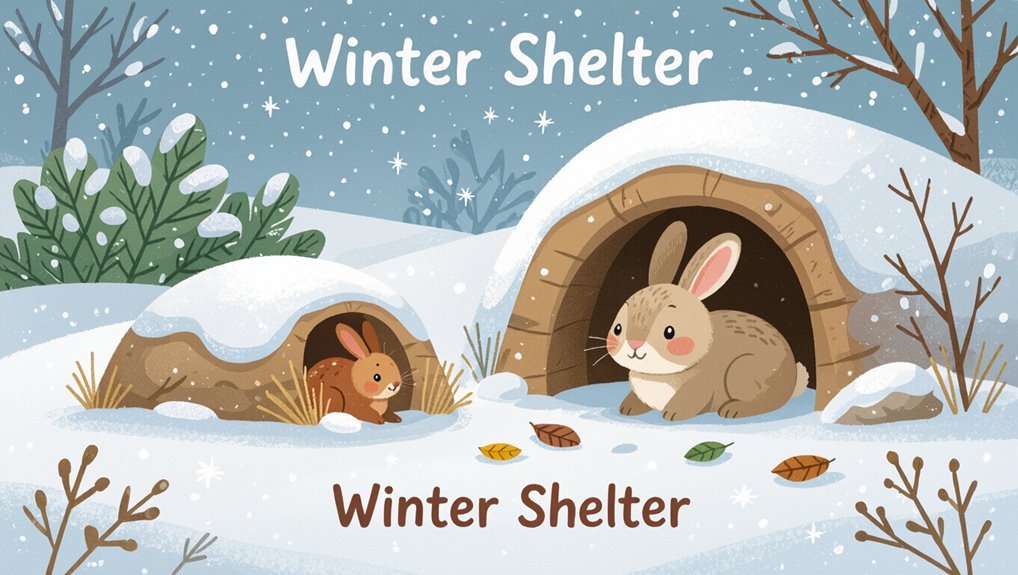
Do bunny rabbits hibernate in winter? You might expect them to sleep through cold months, but they don’t hibernate.
Instead, you’ll see many rabbits stay active when the weather is bearable, shifting their routines to avoid harsh conditions. You can spot them foraging for grasses, twigs, and bark whenever food is available.
As temperatures drop, you’ll notice they seek shelter under dense shrubs, in brush piles, or in burrows dug for safety. Their fur thickens in many species, helping them conserve body heat while they continue living day to day.
How Rabbits Handle Cold Without Hibernating
Rabbits handle cold by staying awake and adjusting their behavior rather than hibernating. You’ll often see them move less during harsh weather, conserving energy between meals.
When it’s windy or icy, you may find them tucked into dense vegetation, burrows, or rabbit huts that block exposure. You can also watch for longer resting bouts and fewer long trips across open ground.
To keep warm, rabbits fluff up their fur to trap air and maintain insulation. They rely on steady food intake, grazing whenever temperatures allow, since warmth depends on energy.
What Happens to a Rabbit’s Body in Cold
When the temperature drops, your rabbit’s body responds quickly by tightening its circulation to the skin and increasing muscle activity in short bursts to generate heat.
You may notice the ears stay cooler first, since rabbits can lose heat through them. Your rabbit also conserves energy by lowering overall activity, which reduces how much fuel it burns.
As cold deepens, breathing may slow slightly to limit heat loss from the lungs.
You’ll also see thicker fur lifting and flattening to trap warmer air close to the body.
How Rabbits Choose Shelter When It Gets Cold
When the cold settles in, you’ll notice rabbits actively seek shelter that reduces wind and drafts first, because moving air pulls heat away fast.
You can see them tuck into dense shrubs, hedges, or evergreen stands where the breeze breaks up. They also favor natural cavities like rock piles, fallen logs, or small burrows with deeper, steadier temperatures.
You’ll often find them using existing underground holes rather than digging new ones, since digging costs energy. Near buildings, they may choose woodlots or stone edges that block weather.
Keep quiet and you’ll spot them settling quickly.
Why Wild Rabbits Stay Active at Night
You might wonder why wild rabbits don’t just sleep through the night—they stay active because night-time foraging helps them search for food while predators are less likely to catch them.
When temperatures drop, you’ll also see they rely on cold weather shelter strategies, like using burrows or dense cover, to stay safe and conserve heat.
This mix of feeding at night and smart protection explains how they survive chilly conditions without hibernating.
Night-Time Foraging For Food
Night-time keeps wild rabbits moving, because their foraging habits help them avoid many daytime threats.
When you watch at dusk, you’ll see rabbits patrol clearings and field edges for tender grasses, clover, dandelion leaves, and twigs. They use keen hearing to spot rustling predators and strong whiskers to guide them through dim cover.
You’ll notice they prefer areas where food stays within easy reach, then they hop to fresh patches before the dark deepens.
Winter slows growth, but rabbits still graze steadily. In brief bursts, you can find their feeding trails and droppings.
Cold Weather Shelter Strategies
As temperatures drop, wild rabbits stay active at night because shelter keeps heat from escaping and guards them from exposure.
You’ll notice they choose spots with thick ground cover, like tall grass, brush piles, or dense hedgerows, to block wind. They also use existing burrows or dig shallow runways that drain water and stay warmer than open fields.
When the cold bites, you’ll see them huddle close to the ground and reduce movement between meals. If storms roll in, they retreat quickly, staying put until conditions improve.
Do Pet Rabbits Need Extra Warmth at Home?
Do pet rabbits need extra warmth at home? You don’t usually need to add heat for indoor bunnies if the room stays stable.
Keep them out of drafts, open doors, and direct sun that swings temperatures. Use a clean, dry bedding base and provide a cozy, covered resting area so they can choose comfort.
Avoid heat lamps, electric blankets, and heating pads, since rabbits can overheat or burn and they rarely adjust safely. If you use a heater, place it far away and monitor humidity and air flow.
Offer fresh water and check skin, ears, and appetite daily.
How Cold Is Too Cold for Pet Rabbits?
You need to know the safe temperature range for pet rabbits, since they can’t tolerate cold the same way all animals can.
If your home drops too low, watch for signs of hypothermia in winter like cold ears, weakness, shivering, and low body heat.
Keep your rabbit warm before these symptoms start, and you’ll reduce the risk of serious illness.
Safe Temperature Range For Rabbits
Pet rabbits tolerate cooler temperatures better than heat, but they still need a safe range to avoid stress and health problems. Aim for about 50–70°F (10–21°C) in the living area.
If it stays below 40°F (4°C), you should reduce drafts, add insulation, and provide deeper bedding. Outdoor hutches can work short-term, but keep sheltered from wind and wet.
Avoid heat above 80°F (27°C) because rabbits overheat quickly. You should also watch humidity; damp cold feels harsher.
Maintain constant access to fresh water, since freezing temps can limit drinking.
Signs Of Hypothermia In Winter
Even when the temperature stays within a generally “safe” range, rabbits can tip into hypothermia if they get chilled for too long or lack proper shelter and bedding.
Watch for cold, stiff ears that feel cooler than usual, slow or weak movement, and shivering that won’t stop.
You might also notice a hunched posture, glazed eyes, slow breathing, or sudden lethargy.
Check for loss of appetite and reduced drinking, since low body temperature can shut down digestion.
If your rabbit feels unusually cold to the touch, move it indoors and warm it gradually.
Contact your vet fast.
How Rabbits Adjust Their Diet in Winter
In winter, rabbits don’t just eat less—they switch what they can access and what their bodies can handle. You’ll notice them favoring tough, dry plants when fresh green growth fades.
They graze on bark, twigs, and buds from shrubs and trees, and they root for dried grasses in sheltered spots.
If you keep a rabbit, you should offer hay daily and provide leafy greens when available, but keep portions modest as temperatures drop.
Many rabbits also practice cecotropes eating, so they extract more nutrients from fiber when food quality falls.
Rabbit Fur: How It Traps Heat (and Moisture)
Rabbit fur acts like a built-in jacket: dense underfur traps warm air close to your rabbit’s skin, while longer guard hairs help break wind and shed light moisture.
When temperatures drop, you’ll notice your rabbit’s coat looks fuller—those underlayers hold more air between the hairs. You also help by keeping bedding dry, since soaked fur can’t trap heat effectively.
In damp weather, guard hairs channel raindrops and meltwater away from the skin, slowing chilling.
If you groom, do it gently so you don’t thin the underfur that provides insulation.
Can Rabbits Get Hypothermia or Frostbite?
Yes—you can put your rabbit at risk of hypothermia or frostbite if they stay cold, wet, or immobile for too long.
Rabbits don’t hibernate, so when temperatures drop, you must keep them dry, draft-free, and able to move. Wet fur chills their skin fast; blocked bedding traps moisture.
If your rabbit’s ears feel unusually cold, pale, gray, or swollen, act immediately.
Hypothermia can look like low energy, shivering, or trouble staying upright. Warm them gradually indoors, offer warmth and fluids, and call a vet if symptoms persist.
Cold Effects on Rabbit Breathing and Heart Rate
When your rabbit gets too cold, its breathing and heart rate can change fast as the body tries to conserve heat. You may notice slower breaths, especially as temperatures drop, because the rabbit shifts energy away from active movement.
At times, you’ll also see a lower heart rate, reflecting a “standby” mode. If the cold becomes severe, breathing can turn irregular—pauses, shallow breaths, or quick bursts—while the heart struggles to keep steady circulation.
You should still avoid cold exposure, since these shifts can signal trouble.
Signs Your Rabbit Is Stressed by Winter Cold
Even before you notice major breathing changes, winter cold can stress your rabbit in subtle ways.
Watch for restlessness: your rabbit may pace, thump, or seem unable to settle. Notice posture too—hunching, tucked limbs, and lowered head often signal discomfort.
Check the fur: if it looks rough or clumped instead of well-groomed, cold stress can disrupt normal grooming.
Monitor appetite daily; a sudden drop in hay or pellets suggests your rabbit is spending energy staying warm.
Also look for activity changes—less movement, weak interest in play, or hiding more than usual can mean the chill is getting to them.
What to Do If Your Rabbit Gets Cold Symptoms
Watch for early cold symptoms like runny nose, sneezing, lowered appetite, or lethargy, and act fast.
Move your rabbit to a draft-free, warm area, add soft bedding, and keep the heat gentle—not hot.
Offer fresh, clean water and help support hydration while you contact an experienced rabbit vet if symptoms don’t improve quickly.
Identify Early Cold Symptoms
How can you tell if your bunny is starting to get too cold? Watch closely for early signs. Your rabbit may hunch, curl tighter, or become less active than usual.
You might notice cold ears that feel cool to the touch, not just “normal cool.” Breathing can slow or seem shallow, and your bunny may eat less, leaving fewer pellets or droppings.
Watch for a drop in body temperature by feel and behavior—if they seem stiff, weak, or unresponsive, act fast. Compare daily habits to your rabbit’s baseline to spot changes early.
Support Warmth And Hydration
Once you spot early cold signs, focus on helping your bunny warm up safely and stay hydrated.
Move your rabbit to a draft-free room, away from vents and wet areas. Keep bedding thick, and warm a towel with your hands or a safe heat pad set on low under half the carrier—never overheat.
If your bunny’s ears feel cold, don’t force heat; check breathing and alertness first.
Offer fresh water in a heavy bowl, or warm water slightly to encourage drinking. Encourage hay and leafy greens, and monitor closely.
If symptoms worsen, call your rabbit-savvy vet.
When to Call a Vet for Winter Rabbit Health
When temperatures drop, you should closely monitor your rabbit’s breathing, appetite, droppings, and energy level, because these changes often signal illness that winter weather can mask. Call a vet urgently if your rabbit stops eating or produces fewer/no droppings. Also seek help if you notice labored breathing, wheezing, nasal discharge, hunched posture, or sudden weakness. Frostbite signs—cold, pale, or swollen ears and paws—need prompt care. Watch these red flags:
| Warning | What you’ll see | Action |
|---|---|---|
| No appetite | won’t eat | call now |
| No droppings | empty box | urgent |
| Wheeze | noisy breaths | emergency |
| Limp body | sudden weakness | same day |
| Swollen ears | pale/black tissue | urgent |
Frequently Asked Questions
Can Rabbits Survive Winter Temperatures Without Any Shelter at All?
Yes, rabbits can survive winter temperatures without shelter, but only if conditions stay mild and snow-free. You can’t rely on this long-term. Provide wind protection and dry bedding, or your rabbit may suffer stress, frostbite, and hypothermia.
Do Rabbits Become More Aggressive or Less Social in Winter?
In winter, rabbits usually become less social and more cautious, not more aggressive. You’ll see them spend more time conserving energy and staying near cover. If food is scarce, you may notice mild territorial behavior, but fights stay uncommon.
Why Do Some Rabbits Refuse to Eat During Cold Weather?
Some rabbits refuse to eat in cold weather because stress, low temperatures, and wet fur reduce appetite. Pain from teeth, illness, or parasites can worsen the effect. You should check hay, offer warm treats, and call a vet if it persists.
How Often Should I Check My Pet Rabbit’s Water in Winter?
Check your pet rabbit’s water at least 2–3 times daily in winter. Rabbits drink frequently, and cold water freezes or gets dirty fast. You should also use a heated crock or bottle and refill whenever levels drop.
Can Rabbits Sleep Outside Even During Snowstorms Safely?
Yes, you can let rabbits sleep outside in snowstorms, but only if they’re fully protected: insulate their hutch, block wind, provide dry bedding, and guarantee unfrozen water and ventilation. Don’t leave them outside during severe cold spells.
Conclusion
You don’t need to worry about your bunny “hibernating” in winter—rabbits stay active, just slower, and they rely on shelter, thick fur, and body changes to handle cold. If your rabbit seems lethargic, breathes hard, refuses food, or feels unusually cold, you should warm them gradually and check their water and hay supply. For any breathing trouble or serious symptoms, call a vet right away.