

Sometimes you see rabbits stray from the wild into your yard, or maybe you find baby bunnies that look abandoned. You may feel intrigued to take these rabbits in and make them your pet. However, you need to be careful and do your research before you move forward.
Now, the real question is, can you keep a wild rabbit as a pet? What challenges do you need to face if you keep one? Let’s get into more details.
Should You Keep a Baby Wild Rabbit as a Pet?
Wild rabbits, especially the baby, may be challenging to be tamed as pets. They’ll face a lot of issues. And if you have other pets in your home, then those pets will suffer in a lot of ways from the wild bunny. You also need to give them much more time than you can anticipate.
Let’s see why it may not a good idea to try to keep a kit as your pet.
1. They May Infect Other Pets
Wild rabbits, especially the kits, harbor plenty of diseases in themselves, mostly viral diseases. These are highly infectious, which is why keeping these rabbits as pets can be dangerous around kids and other pets.
There are two deadly viral diseases that are common in wild animals but can rarely be seen among domestic pets:
(a) Viral Hemorrhagic Disease
This virus is common in rabbits from the wild, where it attacks the internal organs and causes deadly hemorrhaging. It spreads through contact or through the feces of an infected rabbit.
If your pets live in the same area as the infected rabbit, then the virus can infect them.
(b) Myxomatosis
The myxoma virus is responsible for fatal myxomatosis. Rabbits are very prone to this highly infectious disease and can spread it to other rabbits through the discharge from the eyes and nose. Usually, infected rabbits will die two weeks after getting infected.
Rabbits infected with myxomatosis will have nose and eye discharge, swelling, respiratory issues, loss of appetite, and inflamed eyes leading to blindness. There’s no treatment for this disease, so the rabbit will eventually die.
Wild rabbits also carry bacterial diseases that can be passed on to humans:
(a) Tularemia
Although it’s a rare infectious disease, tularemia typically attacks the eyes, lungs, skin, and lymph nodes. Your lymph nodes will be painfully swollen, your eyes will be inflamed, you’ll have sore throat and mouth sores, and may even get diarrhea and pneumonia.
(b) Rabies
Although it’s very rare for rabbits to get rabies, these rabbits can have rabies and pass it on to humans. If an infected rabbit bites or scratches you, you’ll be infected with rabies. It’s fatal, but preventable with vaccines and medications.
2. They’ll Get Distressed
Wild bunnies, especially baby bunnies are used to open, natural environments, where they can move around freely and feed however they like. Keeping them as a pet would mean keeping them in a closed space, which can distress and depress them.
Rabbits, even the wild ones, are sensitive creatures. If they feel distressed, they’ll try to attack you and won’t let you around them. They may even bite you if you try to touch them, get in their territory, or scare them in any way.
3. They’ll Feel Nervous
Baby bunnies that have grown in the wild are often alarmed with unfamiliar surroundings, as they see anything other than rabbits as predators. They get nervous in such situations. They won’t trust you as much as pet bunny babies will do.
Rabbits living in the wild are also quite protective and jealous. They’ll protect their meals at all costs, and will even feel jealous and threatened by the smell of other pets.
4. Other Issues
You may sometimes find a nest of baby wild rabbits near your home and think that maybe their mother abandoned them. That’s not the case at all. Wild rabbit mothers nurse their babies for a few minutes and then go away looking for food and other supplies. They almost never abandon.
So, if you see those babies and think that you can bring them home and tame them, this may backfire. Rabbits living in the wild have excellent senses, so they can smell their way into your house and attack you, giving you various infections and other injuries.
You may bring in those babies if you see them injured, but don’t take them in as pets. Let the mother see that you’re tending to her babies, and then let them go.
Wild Versus Domesticated Rabbits: What Should You Know?
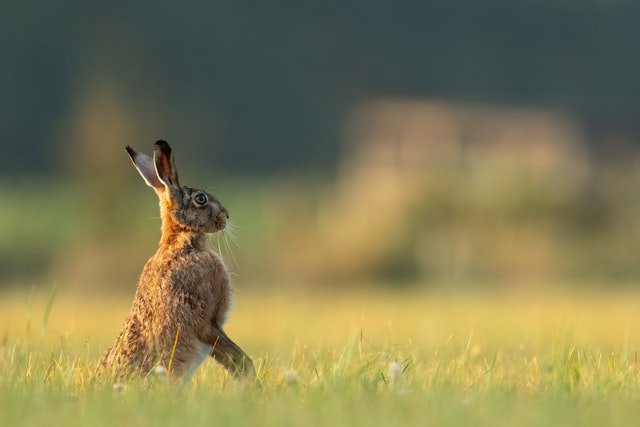
A general rule of thumb with wild rabbits is that they never make good pets. You may try petting them as infants, but chances are pretty slim to have them as obedient pets. These rabbits have very different personalities than domesticated rabbits.
If you do a wild versus domesticated rabbit comparison, you’ll readily see the major differences between a wild bunny and a pet bunny.
| Characteristics | Wild Rabbit | Pet Rabbit |
|---|---|---|
| Behavior | They are aggressive and very territorial. They won’t share anything they have even with other rabbits. | They are family-friendly and accommodating. |
| Living conditions | Wild rabbits live in tunnels with a lot of entrances and exits to stay safe from predators. They sleep and raise their kids in these tunnels. They like living in open, wild areas where they can be independent. | They find sleeping in dark places and cardboard boxes comfortable. They may also like sleeping in beds with a cover. They like living in closed spaces. |
| Food | Wild rabbits eat wildflowers, grasses, weeds, and crops. | They have special requirements for their pellets, fresh vegetables, and clean water, and can’t digest everything. |
| Lifespan | They normally live for up to two years due to all the factors in the wild. However, if they somehow live in captivity, they’ll live much longer. | If taken good care of, they’ll live between five and twelve years depending on their species. If you release them in the wild, they’ll live for only half of that span, maybe even less. |
Can You Domesticate a Wild Rabbit?
It’s an extremely difficult thing to do. It’s not just due to their behavioral pattern and issues with adjusting to the domestic environment. There are a lot of legal issues involved with domesticating a wild rabbit and which breeds you can’t keep.
1. Legal Issues
In most places in America, you can’t keep a native, wild bunny as your pet unless you have a license. You can only take in the rabbit if you see it’s severely injured and it needs first aid. Otherwise, as soon as you see a wild rabbit, call your nearest wildlife rehabilitator.
A wildlife rehabilitator will bring in a veterinarian expert to medicate and nurse rabbits that are injured or strayed from the wild. Until they arrive, keep the rabbit where it was and don’t let any other animal near it.
Also, if you see that the rabbit has open eyes, fully grown ears, and is mobile, then it doesn’t need your attention. But if you see it still hasn’t opened its eyes and is straying from the nest, you need to step up.
If you take in a wild rabbit with the intention of petting it, you will face costly consequences once someone finds out.
2. Behavioral Issues
Pet rabbits have evolved genetically over the years to become quite different compared to wild rabbits. For instance, they’re more tolerant of captive environments and less physical activities. They’re also well-suited around humans and other animals.
Rabbits of the wild breed will never be fully open and easy around humans as they see us as predators. They’ll make use of every opportunity to escape the domestic environment, as they’re more used to the wild.
It’s not easy to deal with mature rabbits. However, you can work well with the babies. Yes, it’s difficult and wild species rabbits carry a lot of risks, but they’re much easier to tame.
How Long Does a Wild Rabbit Live in Captivity?
There’s no specific answer to that, as it depends on a lot of factors. However, wild rabbits may live much longer in captivity compared to the wild where their average lifespan is only two years. This is due to predators, of course, and also other diseases and poisonous foods.
All you have to do is make sure your other pets are well receptive to your wild bunnies and won’t attack them brutally. You also need to ensure they get all the proper foods in adequate amounts.
Can Such a Rabbit Make Good Pets?
The harsh truth is, no matter how much you try, you may not be able to develop a bond with a wild rabbit. In fact, the more you try, the more they’ll think of you as a predator rather than a friend. They’ll even try to escape multiple times in whatever opportunities they find.
The only chance you can have in making a wild rabbit into a good pet is by taking in a baby wild rabbit. Mature rabbits already see humans as predators, but baby rabbits haven’t seen much. So you can pet them however you want, but with patience.
How About a Cottontail Rabbit?
The Cottontail rabbit is one of those wild rabbit breeds that you can’t keep as a pet unless you have a license keeping wild rabbits. However, if you find one wounded, or your pet dog or cat has brought one in because it’s injured, you should immediately call a wildlife rehabilitator.
What Do Wild Rabbits Eat?
The diet of wild rabbits varies according to how warm or cold the weather is. During the warm seasons, they usually eat all the soft vegetation on the ground. This includes grasses, flowers, wildflowers, vegetable leaves, and weeds.
Since winter is a dry, cold season, not much greenery is available, and trees start shedding a lot of their dried parts. Rabbits of the wild species feed on fallen twigs, coniferous needles, barks, and buds.
You can try feeding them carrots, assuming that even rabbits generally like this vegetable. Green leafy vegetables should work well too.
How Can You Tame a Wild Bunny?
Honestly, you need a lot of patience if you want to tame a wild rabbit. You also need to dedicate a lot of your time to them only. Here are some steps you can use to tame a wild rabbit in a humane way:
- Take it in when you see a certain opportunity, such as tending to it when you see that the rabbit is injured or abandoned.
- Be prepared for the rabbit to run off as its first survival instinct upon seeing a human environment.
- Maintain a distance from the wild rabbit all the time. Make it feel safe and unbothered with your distance.
- Be as motionless and seated as possible when it’s lurking near you.
- You may see it trying to get closer to you after you’ve held a lot of patience. Don’t show any reaction to it, and definitely don’t try to pick it up. Otherwise, it’ll run off again.
- Always wear fresh clothes that don’t smell like other pets.
- When it starts getting comfortable around you, start talking to it gently, slowly, and in a low voice. If it freezes because it got scared, don’t pick it up. Let it calm down.
- Wild rabbits are terrified of getting picked up. So if you want it to approach you more, get down on the ground and remain steady.
- Leave a trail of natural rabbit treats that’ll lead it towards you. This may help you to gain its trust even more.
Conclusion
It’s a good idea not to keep wild rabbits as your pet. However, if you decide to keep one, make sure that you’re well prepared and have adequate knowledge about everything you need to do.
This article has everything that’ll help you be educated in these matters. And with this knowledge, you can adopt and take care of a wild bunny in the most gentle way possible.