

Rabbits are sensitive animals, which means they can’t have everything that we may want to give them. However, there are a lot of herbs that are safe for rabbits if you give them in moderation.
So, how safe is mint for rabbits to consume? To find that out, keep reading the article. You’ll get to know what health benefits mint carries and how mint can act as a good remedy for certain issues.
A tip: you should always test it out first when you’re trying to incorporate something new into your rabbit’s diet.
Is Mint Safe for Rabbits?
Rabbits can absolutely eat mints. In fact, it’s one of the safest herbs that they can have. But of course, you need to be cautious when introducing something new in their diet that’s normally not a regular food for them.
There are many varieties of mint available, some of which are good for rabbits to consume. Some of these varieties are Moroccan mint, banana mint, lemon balm, peppermint, lavender mint, and chocolate mint.
But do they like mint?
Do Rabbits Like Mint?
Many rabbit owners say that their bunnies enjoy mint, some from the beginning, some after getting used to the smell and strong taste. However, there are rabbits that don’t like this herb in any way even after trying in every way possible, whether it’s the leaves, stems, or flowers.
If you want your rabbit to like mint, you need to follow some steps. You need to first introduce the herb, and you need to start slow. These sensitive creatures get scared if they feel forced in any way.
You also need to let them explore the herb, whether it’s the leaves, the stems, or the flowers. Also, experiment with varieties to find out which one your rabbit likes more.
How Often Can Rabbits Eat Mint?
You can feed mint to your adult rabbit every day, but you need to be careful about the quantity of how much you feed each time. You can start by giving it one sprig a day to introduce the herb, and then start giving more according to the body weight.
A little bit of this herb goes a long way when it comes to nutritional benefits. No more than a hundred grams should be enough to fulfill the daily nutritional needs of your pet. This includes the stems and leaves of a mint plant.
However, if your rabbit is of medium or large breed, you can give more mint, but make sure not to exceed 500grams per day. And if you see that your rabbit has consumed over the limit, do not delay, take it to the vet immediately for treatment.
Which Parts of Mint are Safe for Rabbits?
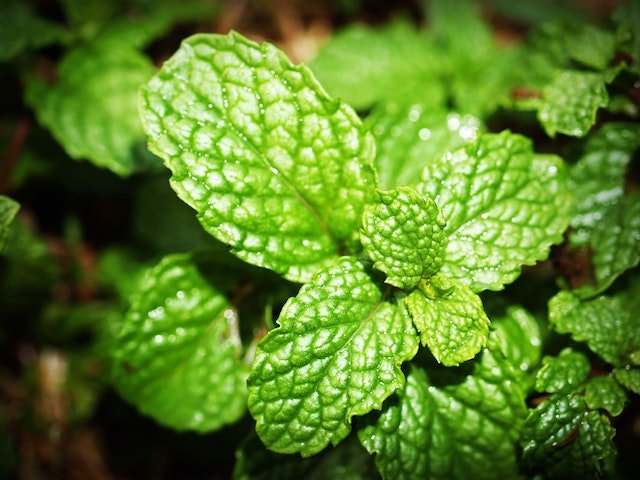
Almost all parts of mint are safe for rabbits to consume. There’s always a debate about whether to feed the roots to rabbits, as the roots of some varieties don’t have any benefit, and others have their nutrients concentrated too much in there.
Mint leaves have all the flavor and nutrition. It’s also a powerhouse of medicinal benefits, therapeutic properties, and essential oils, making mint leaves the perfect garnish in your rabbit’s bowl.
Mint stems aren’t any less in good properties. It has the same sharp, minty, sweet taste as the leaves, and is full of fiber. Besides, the texture is perfect for rabbits to chew on. Mint flowers aren’t potent like the leaves and stems. However, they have a fruity taste and are completely safe for rabbits to eat.
How Should You Give Mint to Your Rabbit?
You can give fresh mint to rabbits in sprigs, as a garnish on their bowls once a day, or even as a drink. Before doing anything mentioned, you need to wash the plant thoroughly under running water to remove any toxic chemicals like pesticides.
To use it as a garnish or to incorporate in its bowl, tear up the leaves and stems and mix it up with everything else in the bowl. And if your bunny loves the strong flavor, you can just lay it on top of the food.
To make mint tea for your rabbit, simply brew it in hot water and let it cool. But do it only if your pet likes having any other drink besides water.
What Are the Benefits of Mint in Rabbits?
This tasty herby treat for rabbits isn’t short of nutritional value. Besides, you can use mint to treat gastrointestinal and stomach issues in your pet.
Mint is rich in vitamins A, C, E, K, B-complex, calcium, potassium, iron, zinc, and magnesium. It’s also a good source of proteins, carbohydrates, and antioxidants, and is low in oxalic acid. Mint has enough dietary fiber as well to keep your rabbit’s digestive system healthy.
Let’s see how each nutrient adds value to a rabbit’s health.
1. Vitamins
Vitamin A in mint will improve your rabbit’s vision, strengthen the immune system, and aid in the growth and development of the fetus in the womb. Vitamin B-complex is crucial for brain development, and the synthesis of proteins and sugars, and helps the nervous system function properly.
Both vitamins C and K strengthen their bones and immune system. Vitamin C and E act as excellent antioxidants, which are necessary to break down free radicals that damage the DNA structure in rabbits. They also keep the skin and nails healthy and boost collagen production.
Vitamin C also helps in producing scar tissue and prevents scurvy. It strengthens tissues, tendons, and blood vessels as well. Additionally, vitamin K also helps to synthesize and digest proteins properly.
2. Minerals
Calcium, of course, is crucial to strengthen bones and teeth. This mineral is also important to maintain heartbeats and muscle contractions and allow blood to clot properly.
Potassium is another crucial mineral that helps to maintain heartbeats and muscle movement properly by keeping motor functions active. Potassium also helps to maintain normal fluid levels in cells.
Iron, apart from making hemoglobin for red blood cells, also makes the muscle protein myoglobin. This mineral helps oxygen to travel across the body with the help of red blood cells.
Zinc is essential for rabbits to aid in cell division, synthesis of DNA, and stabilizing DNA strands. It also helps to create cellular differentiation.
The best mineral for the last, magnesium is important for synthesizing proteins, building DNA chains, building bone structure, regulating blood sugar levels, and maintaining blood pressure. It also keeps the nervous system active.
Treating Your Rabbit Using Mint
Mint has been used as a remedy for ages to treat humans as well as animals. Its medicinal properties make mint a good herb that treats many physical issues in rabbits.
Mint is abundant in edible fiber, which makes it great for treating indigestion and gassiness in rabbits. It clears out blockages in the digestive tract.
The lavender mint and lemon balm mint have also been shown to effectively reduce stress in rabbits. They also provide antiviral and antibacterial benefits in rabbits, stimulate their appetite, and also relieve pain.
And if you think your rabbit’s brain functionality is slightly lacking or the muscles aren’t as strong as they should be, just give mints! The essential vitamins and nutrients will help to make up for deficiencies causing these developmental or mobility issues.
When is Mint Bad for Bunnies?
Although it’s a good herb, you should still be careful, as this herb can be dangerous at times for bunnies. You should be especially cautious about giving this herb to baby bunnies, as their stomach is extremely sensitive.
Baby rabbits shouldn’t have anything but hay until they become adults. Therefore, you should avoid feeding this herb to them. Besides, take care that your rabbit doesn’t consume too much mint. Otherwise, they can suffer from diarrhea.
Which Variety of Mint Should They Steer Clear From?
No matter what, keep pennyroyal mint away from your rabbit, or your rabbit away from this variety of mint. This mint is poisonous for humans to consume. Imagine the negative effects it’ll have on rabbits if they consume it even accidentally.
Spearmint is also something you shouldn’t give to your rabbits. It’s not exactly toxic, but studies have shown that it has some negative effects on human health and rats. So, to be on the safe side, avoid this variety for rabbits too.
Conclusion
Sensitive creatures like rabbits can benefit greatly from mint, a great herb that is rich in great vitamins and minerals. It can keep your bunny healthy and free from digestive issues and flatulence. But be careful with the variety of mint that you’re giving.
Other than that, I hope your rabbits love the taste of mint, so that you can make it a part of their daily diet!